A Sketchbook or Loose Sheets for a New Drawing Habit?
Choose a sketchbook or loose sheets by how you want drawings to develop, revise, and display, so your supplies support the work you want to keep.
The common mistake is choosing a sketchbook because it looks like the proper tool for drawing, then avoiding it when a page feels too precious. That hesitation can cost you the easy, repeatable practice a new drawing habit needs. A sketchbook or loose sheets each shape how drawings accumulate, change, and leave the desk; choose according to what you want to keep.
What does a sketchbook ask you to do?
A bound sketchbook gives drawings an order before you make them. Turn a page, and the next drawing follows the last whether the subjects connect or not. That sequence can be useful if you want to see a habit take form: recurring shapes, shifts in attention, or a subject revisited after a gap.
Binding also sets a limit around the work. A page cannot be pulled out without altering the book, so the drawing stays beside its neighbors. This can make a sketchbook a record rather than a stack of individual pieces.
There is a practical tradeoff. The gutter—the inner edge where pages meet—can make it awkward to draw across the center, while a book may not lie flat on every surface. If you expect to make wide compositions or work near the binding, look for a format that opens comfortably and has enough page area for your hand.
Use the book when the order of attempts matters as much as any single finished drawing.
What changes when you draw on loose sheets?
Separate sheets let you choose the working surface one drawing at a time. You can spread several pages across a table, compare variations side by side, and keep an unfinished drawing apart from the next one. That freedom suits work that depends on rearranging, selecting, or revising.
Loose sheets also make display decisions easier. A drawing can move from the desk to a folder, portfolio, wall, or frame without carrying the rest of a book with it. The same freedom creates a small organizing task: decide where finished, active, and discarded attempts will go, or useful pages can become hard to find.
Paper choice matters more when each sheet stands alone. Smooth paper can suit fine pen lines; toothier paper gives dry media such as charcoal or soft pencil more texture to catch. If you switch between ink, graphite, pastel, or wet media, consider how each paper handles your materials and whether a test scrap is sensible.
Loose sheets are a good fit when a drawing may need to travel, be rearranged, or be shown on its own.
How do sequence, revision, and display change the choice?
Think of these as three separate decisions, not one verdict about which format is better. Sequence asks whether you want a continuous record. Revision asks whether you expect to replace, layer, or compare versions. Display asks whether the work should remain attached to its making history or stand alone.
- Sequence: Choose a bound book if each drawing can follow the previous one without needing to be sorted later. Choose sheets if you want to group drawings by subject, stage, or project after making them.
- Revision: Choose sheets if you often want to set aside a draft and begin another version without changing the original. Choose a book if revisions can sit on the next page as part of the record.
- Display: Choose sheets if selecting a single drawing for a wall or portfolio is likely. Choose a book if sharing the sequence—turning pages to show how an idea developed—is part of the experience.
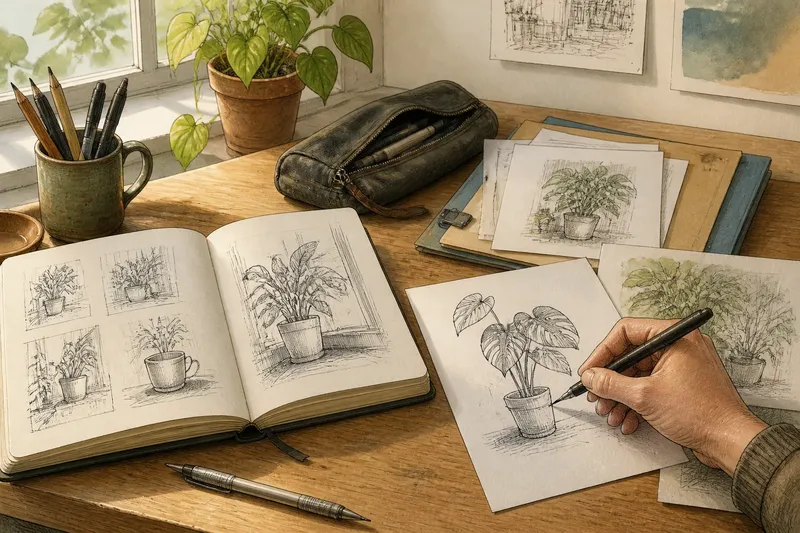
Say you want to draw the same houseplant through changing light. Imagine keeping a small bound book on the windowsill, with a new page for each session; the expected result is a browsable sequence that makes changes in the plant and your attention easy to compare. If your aim is instead to make one drawing for a frame, separate sheets let you keep several attempts apart and select the one you want to display.
For a habit that includes both kinds of work, keep one modest sketchbook for daily observations and a folder of loose sheets for pieces you may revise or show. The distinction gives each format a job rather than asking one surface to do everything.
Which format fits common drawing situations?
Is a sketchbook better for daily practice?
It can be, if the bound sequence helps you return to the page without deciding where each drawing belongs. Keep the book with the pencil or pen you use most, and allow some pages to be rough or unfinished.
Are loose sheets better for finished drawings?
They make it simpler to separate a finished piece from practice pages and choose how to store or display it. A sheet still needs a home, so use a folder or portfolio that keeps it flat and easy to locate.
Can you use both formats for one project?
Yes. Keep exploratory sketches in a book, then move promising compositions to loose paper when you want to revise or present them separately.
What should you check before buying paper?
Check the surface, binding or sheet format, and whether the paper suits the medium you plan to use. Follow the product label or manufacturer’s instructions where they apply, especially for compatibility with wet media.
How can you start without making the choice feel permanent?
Begin with the format that makes the first drawing easiest to start. If a new book feels too formal, use the first page for a quick study of something within reach: a cup, a shoe, or the corner of a room. If a loose sheet feels too easy to lose, place a few sheets in a labeled folder before you begin.
Give the materials a simple arrangement. Keep a sketchbook and one drawing tool together, or store loose paper with a pencil and a folder in the same spot. A drawing habit is easier to return to when the setup does not require a search or a separate sorting project.
After a short run of drawings, notice what you wanted to do with them. Did you look back through the order, compare versions, or choose one to show? Let that preference guide what you keep using; the best drawing format is the one that supports the kind of work you want to return to and keep.
A sketchbook or loose sheets is not a permanent identity. Keep the format that makes your current drawings easier to make, revise, or share, and change it when the work asks for something different.